Most Delhi NCR weekends follow the same script: a mall, a café with a long waiting list, and a slow drive home. If you want dust on your shoes instead, trekking in Aravalli Hills is closer than you might think. The range runs through Gurgaon, Faridabad and the Delhi–Haryana border, and its rocky ridges are a short drive from the city.
This guide explains what the terrain is like, where trail-minded travellers head near Mangar and Dhauj, when to go and what to pack. It also shows how Camp Wild Retreat at Aravali Valley, near Dhauj in Faridabad, works as a base for the hills. Think of it as a plan you can use this month, not a brochure.
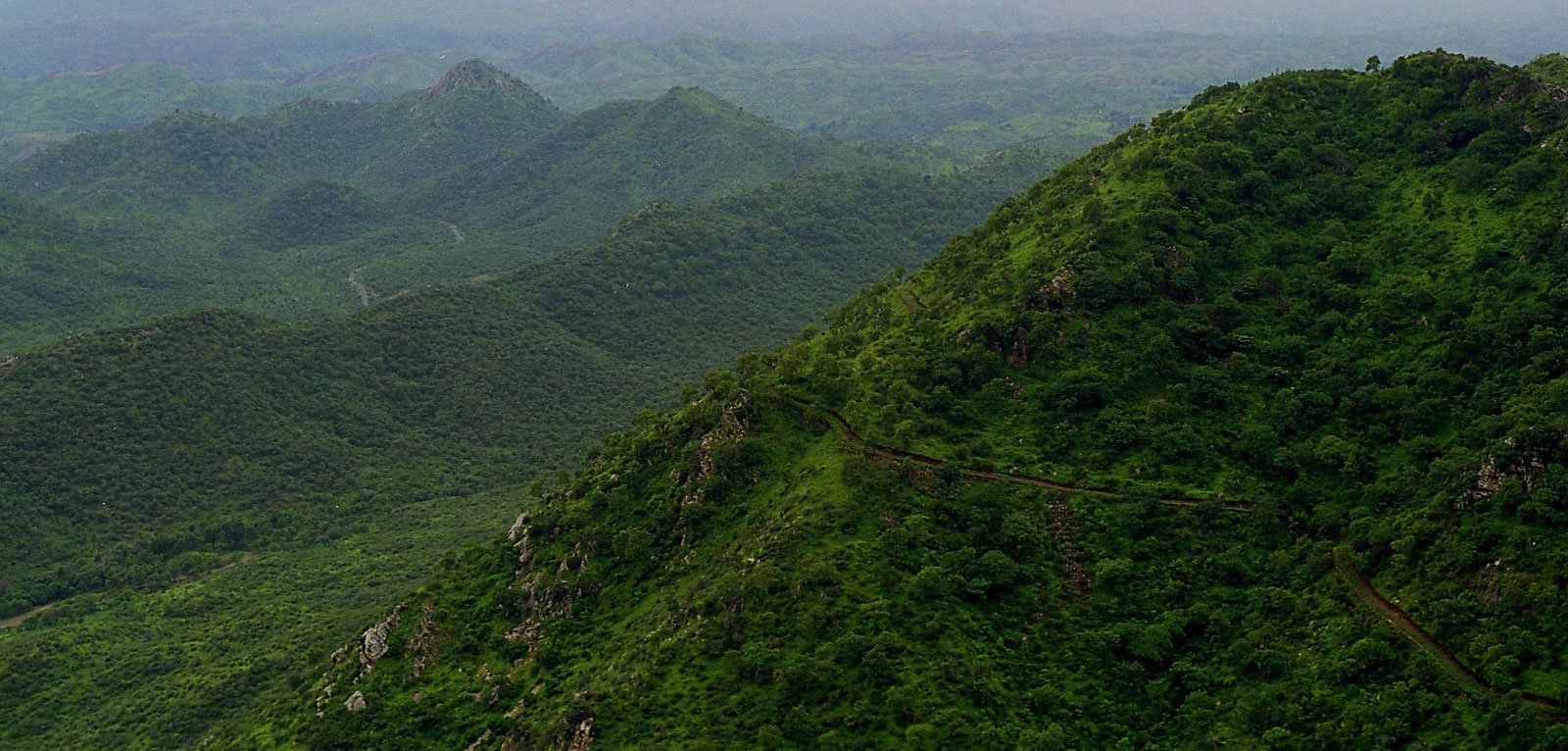
The Aravalli Range is the oldest fold mountain system in India. Millions of years of weathering have worn it down almost completely, so there is no snow, no thin air and no multi-day logistics. What you get instead is rocky ridges, dry scrub forest, village tracks and wide valley views.
That makes the range friendly for first-timers, with one warning. The ground is uneven, and a loose stone does not care how fit you are. Your lungs will have an easy day, but your ankles will not, so shoes matter more than stamina.
Mangar village sits on the Delhi–Haryana border in Faridabad district. Beside it lies Mangar Bani, a sacred grove that local communities have protected for centuries. Local tradition says a saint named Gudariya Das forbade the cutting of trees there, and that belief helped keep one of the last patches of native Aravalli forest near Delhi intact.
The rocky tracks around the valley attract walkers, birdwatchers and photographers, and the forest looks its liveliest during the monsoon, with birdcalls and colourful butterflies. Because the grove is sacred and protected, check the current access rules locally before you enter, stay on existing paths and carry your litter out.
Camp Wild Retreat sits at Dhauj Bandh in Faridabad district. The Aravalli slopes are a few hundred metres’ hike from camp. That walk leads to the spot where the camp runs its rock climbing and rappelling sessions.
Those sessions run between 9 am and 5 pm, last one to two hours and depend on the weather. An experienced instructor stays with you throughout, and the harnesses and gear are UIAA-certified. The best season runs from September to April. The rappelling cliffs stand about 100 feet high, and the view of the valley from the top justifies the hike up.
If you are looking for hiking near Gurgaon, start with the Gurgaon–Faridabad highway. Guests from Gurgaon, Jaipur and South, North or West Delhi turn in at the Mangar police station and follow the Camp Wild Retreat road to Dhauj Bandh. This route suits sedans and SUVs only, because the village stretch near Mangar is narrow, and coaches cannot use it.
Travelling from Faridabad, Ghaziabad, East Delhi, Sohna or Agra? Take the Ballabgarh–Sohna state highway and turn in at the Dhauj police station. Buses and large coaches must use this route. If you are exploring nature trails near Faridabad with a school or office group, send the coach this way.
Both highways have tolls, and the last 3 km are typical village roads: single-lane, metalled and shared with playing children, so drive slowly. Avoid very low-ground-clearance cars. Free parking is available for over 100 cars.
Leave early so you reach the camp before the heat builds. Walk the slopes first while your legs are fresh, and if you have booked rock climbing or rappelling, allow one to two hours for it between 9 am and 5 pm. Have lunch from the menu you chose at booking, then rest; nothing says expert hiker like a nap.
The village experience and organic farming activities suit a slower afternoon. Start the drive home with daylight left, since the last 3 km are village road.
Season decides whether your trek feels like a pleasant morning or a punishment. Typical weather at the camp runs around 25°C in the daytime in January and February, with cold nights of 5–10°C. March to mid-April warms up to about 35°C, and from mid-April to mid-July daytime heat reaches around 38°C. July to August is warm and humid.
For comfortable walking, aim for October to February. September and March also work if you start early. Daytime highs run around 25–30°C in September and October, then drop to 20–25°C in November and December, with nights of 10–15°C. A monsoon trek rewards you with green hills but slick rock, so wear shoes with deep grip and take descents slowly. Peak summer afternoons belong in the shade, not on a rock face.
You do not need technical gear for short walks, but a few basics make a big difference:
The Aravallis around Gurgaon and Faridabad form a wildlife corridor. Surveys of the Haryana Aravallis have recorded leopards, striped hyenas, golden jackals, nilgai, porcupines and peafowl. You may never spot more than a peacock, but it pays to act as though you share the hills, because you do.
Start in the morning and finish before dusk. Keep your voice and music low, never feed monkeys, and leave plants and rocks as you found them.
Camp Wild Retreat offers air-conditioned cottages in two styles, eco lodges and attic lodges, plus glamping tents. The cottages have verandas facing the Aravalli hills, stone furniture and raw-brick walls, so they feel rustic rather than hotel-like. Hot water comes from solar geysers; on cloudy winter days the team may send it in buckets.
Meals are home-style, and much of the produce grows organically at the camp. Set the menu when you book, because there is no à la carte ordering or room service. There is also no TV, so the evening entertainment is the night sky and whoever lost the card game. A swimming pool is available at the camp, Wi-Fi works near reception, and Airtel, Jio and Vodafone connections work well elsewhere. Check-in is at 2 pm and check-out at 10 am.
Yes, if you pick short routes and start early. The hills are low and worn down, but loose rock and heat can tire first-timers faster than the distance does.
About 48 km from Connaught Place, though the final 3 km of village road slow you down.
Short, accompanied walks suit most children. Rock climbing for children is also available on the hills near the camp, led by a professional guide.
For rock climbing and rappelling, an instructor comes with the activity. For longer walks into forest land, check with the camp team first, since access rules can change.
Trekking in Aravalli Hills will not give you Himalayan drama, but it gives you something rarer in NCR: quiet ridges, open valley views and a comfortable bed before dark. Pick the cooler months, wear proper shoes, respect the forest and keep your first route short.
If you want a base near Mangar and Dhauj, explore the stay and activity pages on this website, then message the team to check availability or ask about walking routes before you travel.
Skip the wait! Message us directly to check AC cottage availability, reserve adventure activities, or plan your stay at Camp Wild.
Check Availability Usually replies in minutes